

In the ever-evolving landscape of education, eLearning has emerged as a powerful tool, offering flexibility, accessibility, and the potential to reach diverse audiences worldwide. However, one challenge persists: how to keep learners engaged in a virtual environment where distractions are just a click away. This is where storytelling comes into play. By weaving narratives into eLearning, storytelling transforms dry, data-driven content into compelling, memorable experiences that resonate with learners on a deeper level.
Why Storytelling Matters in eLearning
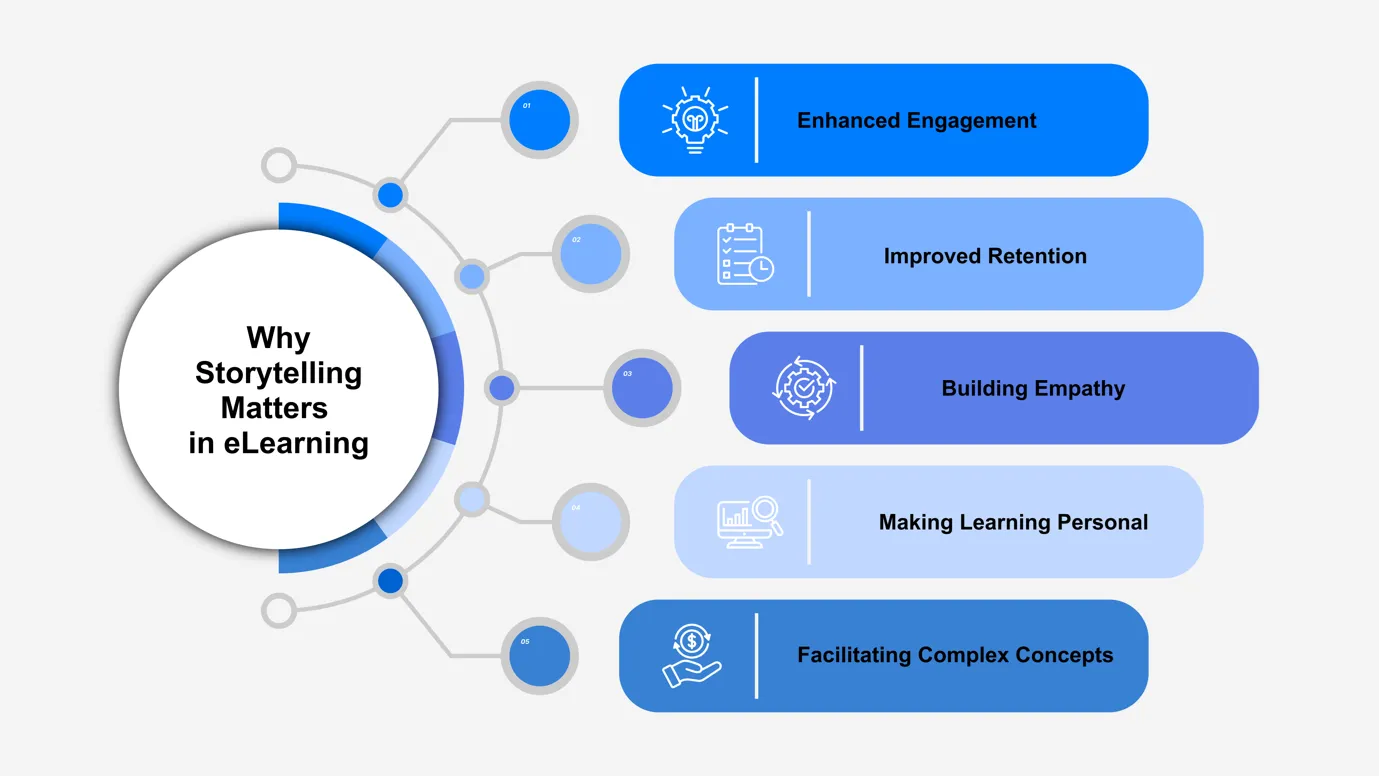
- Enhanced Engagement Storytelling captivates attention. Whether it’s a fable, a personal anecdote, or a case study, stories have the unique ability to draw learners in, making them more likely to stay focused and absorb the material. Unlike plain facts or figures, a well-told story triggers emotions, sparking curiosity and encouraging learners to delve deeper into the content.
- Improved Retention Our brains are wired to remember stories. Research shows that when information is embedded in a narrative, it is easier to recall later. By using storytelling in eLearning, learners can retain critical concepts and apply them in real-world situations more easily. Stories provide context, making abstract ideas more tangible and relatable.
- Building Empathy Stories foster empathy by allowing learners to see the world from different perspectives. In eLearning, this can be particularly valuable in courses focused on diversity, ethics, leadership, or customer service. Through storytelling, learners can experience scenarios from various viewpoints, leading to a deeper understanding and appreciation of the subject matter.
- Making Learning Personal Storytelling can humanize eLearning by making it more personal. When learners see themselves in a story or connect with a character’s journey, they are more likely to engage emotionally with the content. This connection not only makes learning more enjoyable but also drives home the relevance of the material to their own lives and experiences.
- Facilitating Complex Concepts Some topics can be challenging to grasp, especially when presented in a traditional, linear format. Storytelling can break down complex concepts into digestible, relatable segments. By framing these concepts within a narrative, learners can follow a logical progression, making the learning process smoother and less intimidating.
How to Incorporate Storytelling in eLearning
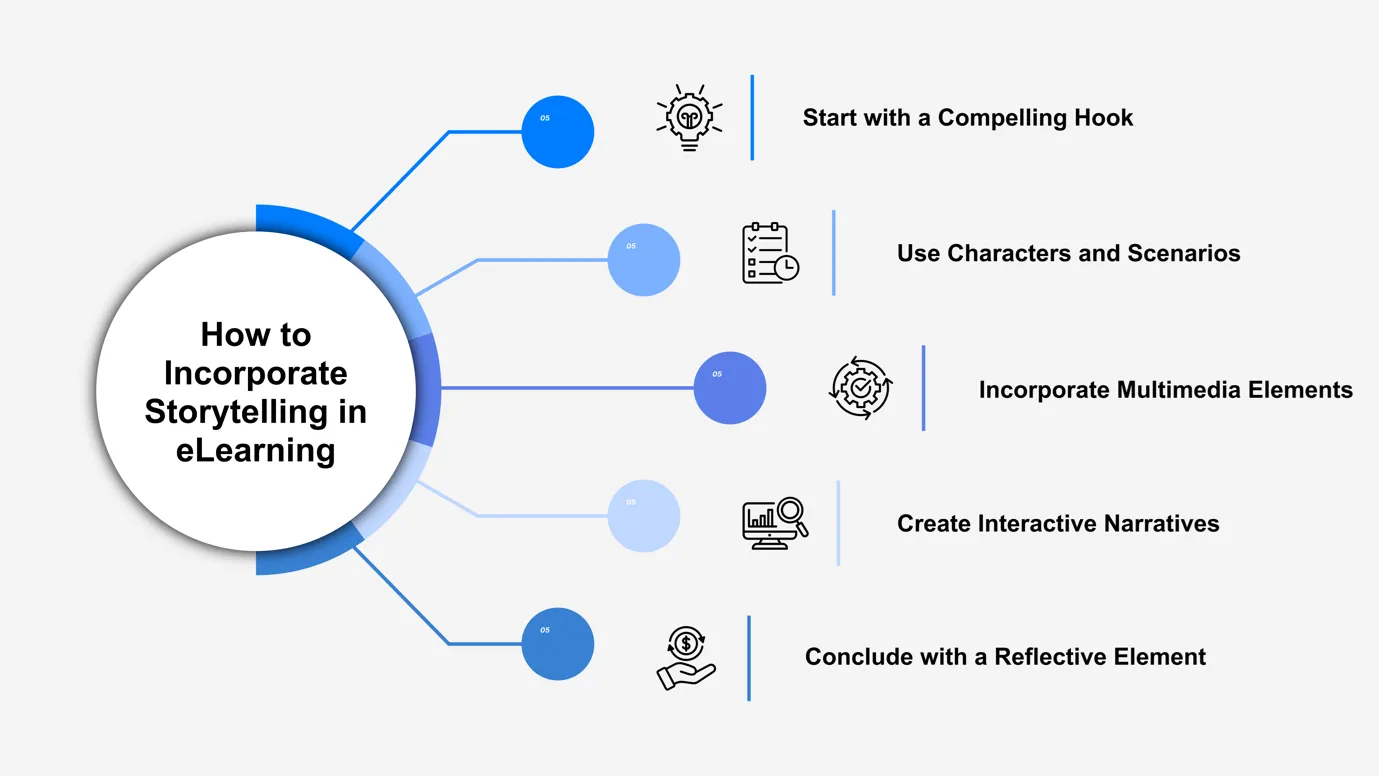
- Start with a Compelling Hook Just like in a novel or movie, the beginning of your eLearning module should grab attention. Open with a scenario, question, or challenge that piques curiosity and sets the stage for the story to unfold. This approach will engage learners from the get-go, making them eager to see how the narrative develops.
- Use Characters and Scenarios Introduce characters that learners can relate to. These could be fictional personas, real-life figures, or even the learners themselves placed in a scenario. Through these characters, present challenges and decisions that mirror real-life situations, encouraging learners to think critically and explore different outcomes.
- Incorporate Multimedia Elements Enhance your storytelling with multimedia—videos, images, audio clips, and animations. These elements can bring your story to life, making it more dynamic and immersive. Visual storytelling, in particular, can be powerful in conveying emotions and creating a more vivid learning experience.
- Create Interactive Narratives Take storytelling a step further by making it interactive. Use branching scenarios where learners can choose different paths, each leading to unique outcomes. This not only makes the story more engaging but also reinforces learning through decision-making and exploration.
- Conclude with a Reflective Element After the story concludes, encourage learners to reflect on what they’ve learned. This could be through discussion prompts, quizzes, or assignments that require them to apply the knowledge gained from the narrative. Reflection helps solidify learning and ensures that the story’s lessons are carried forward.
Conclusion
Incorporating storytelling into eLearning is more than just a technique—it’s a powerful strategy to make learning more engaging, memorable, and meaningful. By tapping into the natural human affinity for stories, storytelling increases eLearning experiences that not only impart knowledge but also inspire, motivate, and transform learners. Whether you’re developing corporate training, academic courses, or personal development programs, storytelling is a tool that can elevate your eLearning to new heights. So, as you design your next eLearning module, remember: every learner has a story, and it’s up to you to help them tell it.
Author
Kristina Grbavac